Sorkin's Soapy Crash Story
The current stock market volatility is testing investor meddle once again. The second Trump administration’s “Liberation Day” tariff announcement and the Iran invasion have produced selloffs that have punctuated what has been a constant bull market in stocks. The Great Financial Crisis seems like a long time ago. The crash of 1929 is largely forgotten, let alone previous panics.
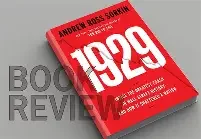
Andrew Ross Sorkin has brought the great crash back to life with another bestseller, 1929: Inside the Greatest Crash in History—And How It Shattered a Nation. Sorkin’s telling of the financial debacle focuses on a few individual stories As he writes, A Night to Remember about the sinking of the Titanic was his “narrative touchstone.”
The New York Times financial columnist and CNBC anchor maintains access to leaders at Davos and has a standing invite to Allen & Company’s strictly off-the-record Sun Valley conference. His book, 2009’s Too Big to Fail, became one of the definitive accounts of the 2008 financial crisis and he parlayed it into an HBO movie and co-created Showtime’s Billions.
Of course if you’re looking for an academic treatise as to what happened, Sorkin’s book is not for you. Instead read Murray Rothbard’s America’s Great Depression, a book historian Paul Johnson called “an intellectual tour de force.”
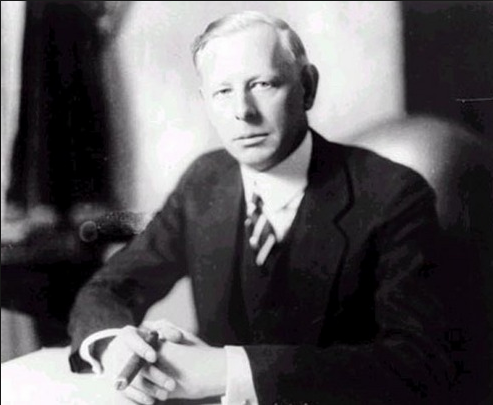
Sorkin begins the book and spends an inordinate amount of his story on Charles Mitchell the charmain and CEO of National City Company and National City Bank. It’s possible Sorkin gets another movie deal out of 1929 for characters like astrologist Evangeline Adams, speculator Bernard Baruch, actor Groucho Marx, UK politician and degenerate stock punter Winston Churchill, short seller “Boy Plunger” Jesse Livermore, and prosecutor Ferdinand Pecora.
Sorkin told Vanity Fair that Charles Mitchell was the Jamie Dimon of his day, while foil Carter Glass is today’s Elizabeth Warren. Well, “except that he’s racist,” Sorkin said of Glass. He compares auto industry revolutionary, with 13 children, John Raskob, with today’s Elon Musk. The modern version of Jesse Livermore is Pershing Square Capital’s Bill Ackman.
Like the Titanic, National City Bank was thought to be impregnable but it would be “a bigger bank run than the world had ever seen.” Of course the bank would collapse as its loan collateral (stock prices) plummeted. Everybody knows what happened in late October, 1929. What Sorkin writes is essentially a screenplay chronicling the movements and conversations of the various key players in this drama.
For example, early in the book: “This evening, however, [Charles Mitchell] had to rush to freshen up before heading to the home of another titan of finance, Bernard Baruch, for a formal dinner attended by a who’s who of banking and industry giants in honor of an English politician by the name of Winston Churchill."
Gossip column stuff. But, who doesn’t love to read gossip columns or watch soap operas (like Murray Rothbard did)? Plus, it will be great on the big screen.